



What Utahans (and Most) Americans Need to Know Before Ordering Swiss Fondue

You’ve arrived in Switzerland. Snow-capped mountains surround you. Cowbells echo in the distance. You sit down in a cozy alpine restaurant and confidently announce, “I’ll have the fondue!” Excellent choice.

But before you imagine little cubes of steak, chocolate fountains, or a giant pot of melted Velveeta with tortilla chips, let’s have an important cultural conversation. Swiss fondue is not “American fondue.” In fact, the first surprise for many Americans is this: real Swiss fondue tastes strongly of wine.

Yes… wine.

A Journey of Flavor

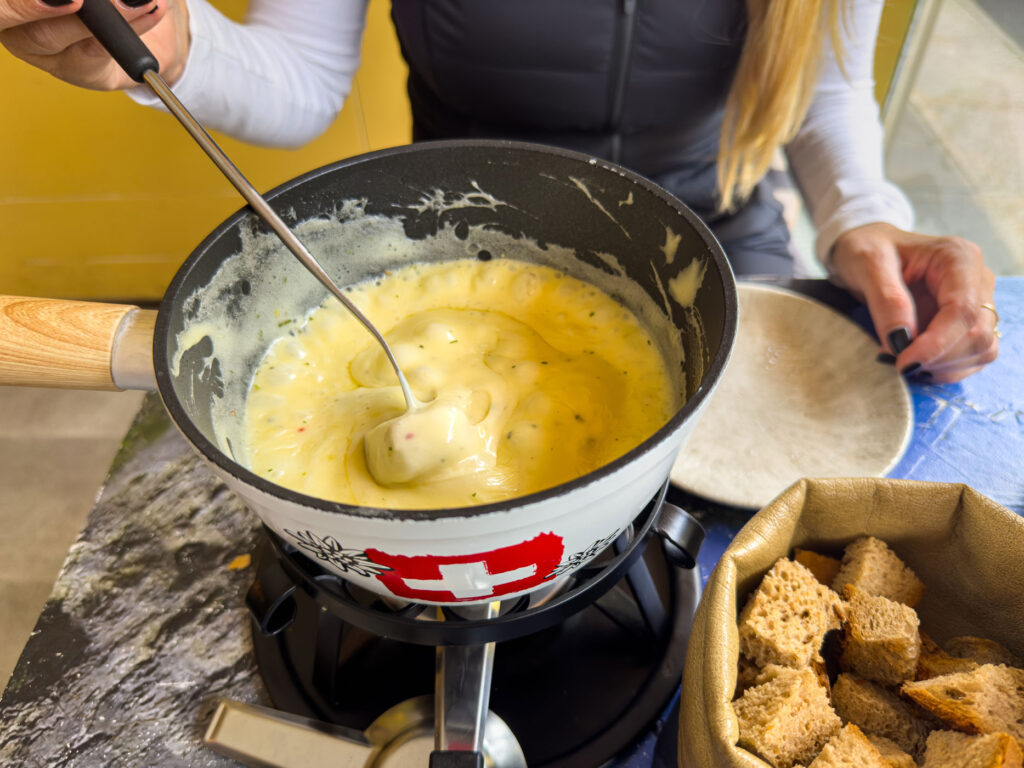
You need to know that traditional Swiss cheese fondue is made by melting cheeses like Gruyère and Emmental with white wine, garlic, and a little kirsch (a cherry brandy). The wine is not just “added for flavor”, NO, it’s a major ingredient that helps keep the cheese smooth and creamy. So if you are someone who really dislikes the flavor of wine, authentic Swiss fondue may not be your favorite meal. It’s rich, tangy, earthy, and wonderfully Swiss… but definitely not mild queso dip.  You have been advised!

If that description makes you nervous, don’t panic! Switzerland has another melted cheese masterpiece you may love instead, my personal favorite, Raclette. Raclette is a milder melted cheese dish where warm cheese is scraped over potatoes, meats, pickles, and vegetables. It’s creamy, comforting, and generally not wine-forward like fondue. Many Americans who are surprised by the taste of traditional fondue end up absolutely loving raclette.

The Art of Dipping

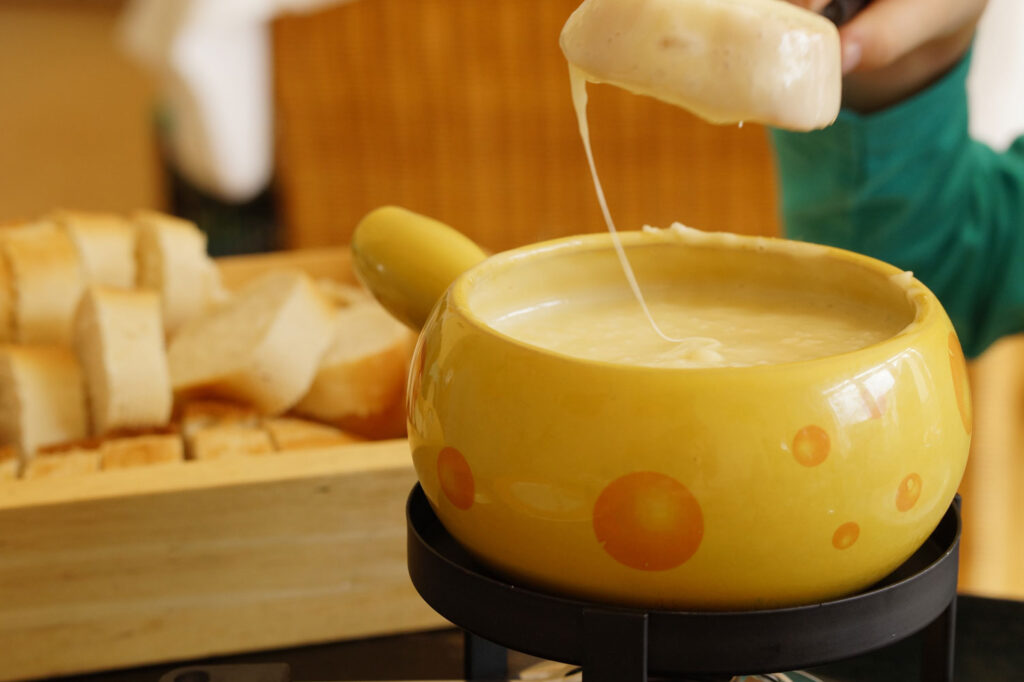
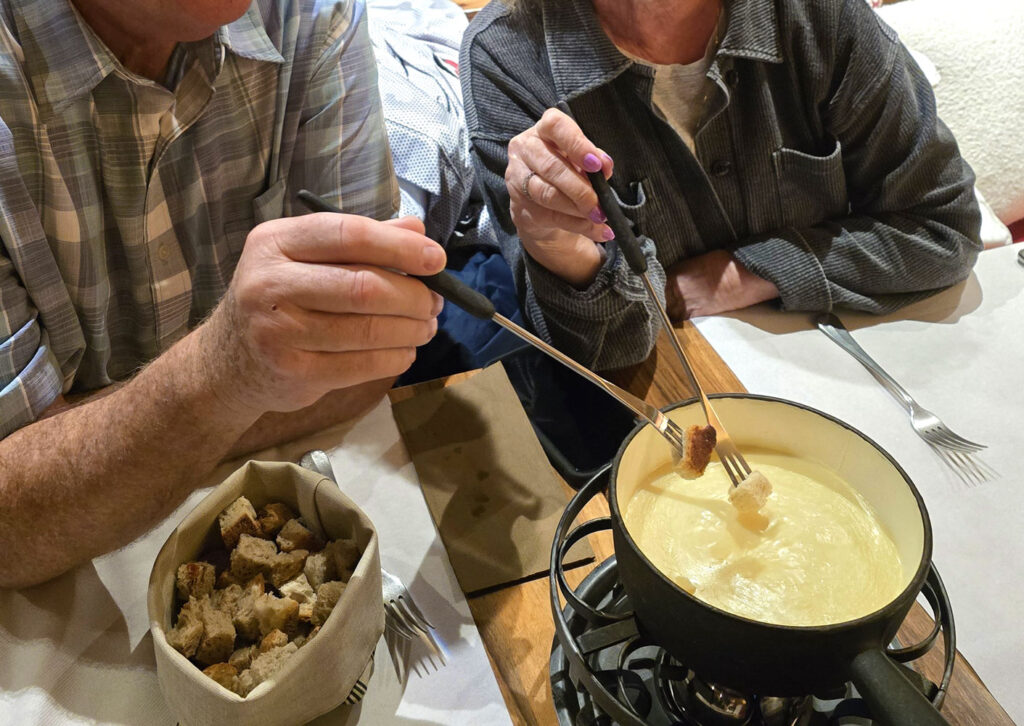
So, you decided to try to fondue – again, great choice!  Now let’s talk about the dipping situation because this is where many Americans also get confused. In Switzerland, the main dipping item is usually bread. Not apples. Not broccoli. Not giant platters of random vegetables. Just bread. Sometimes you may also get boiled potatoes, small pickles, pearl onions, or cured meats depending on the restaurant, but don’t expect the massive “fondue buffet” experience many U.S. restaurants offer. Swiss fondue is simple, rustic, and very communal.

And speaking of communal… there are fondue social rules.

Table Manners

First, everyone at the table usually shares the same pot. This means your bread cube is entering the same bubbling cheese lake as everyone else’s. Don’t double dip. Don’t lick the fork. And whatever you do, don’t lose your bread in the pot! In Switzerland, dropping your bread can come with playful “penalties” depending on the group.  It can be anything from buying drinks to singing a song or answering embarrassing questions.

Another important tip: keep the fondue moving. Gently stir as you dip to help prevent the cheese from sticking or burning on the bottom. And when you near the end, don’t be alarmed if people get excited about the crispy cheese crust forming at the bottom of the pot. That golden layer, called la religieuse, is considered a delicacy by fondue lovers.

Last Bites

One final warning about fondue or raclette you need to know.  It is heavier than it looks. After a full day walking through charming Swiss villages, riding trains or climbing mountain viewpoints, melted cheese sounds like the perfect reward — and it is — but pace yourself. The combination of cheese, bread, altitude, and the added wine has humbled many confident travelers.

So embrace the experience, laugh at the learning curve, and remember, in Switzerland, cheese fondue & raclette isn’t just a meal, It’s an event.

Wendy has loved travel from a very early age. She recalls as young as 8 asking for travel opportunities “to go somewhere new” and that love continued straight into travel school from high school graduation. In her 30+ years in the business, she’s had the opportunity to work and travel in many aspects of this industry. She’s worked in hotel operations, as a traditional travel agent, a corporate agent, travel course teacher, technology support, and while she’s loved them all feels like she’s found her passion and niche in groups and escorted tours where she has spent the last 15 years.

Additional Blog Posts